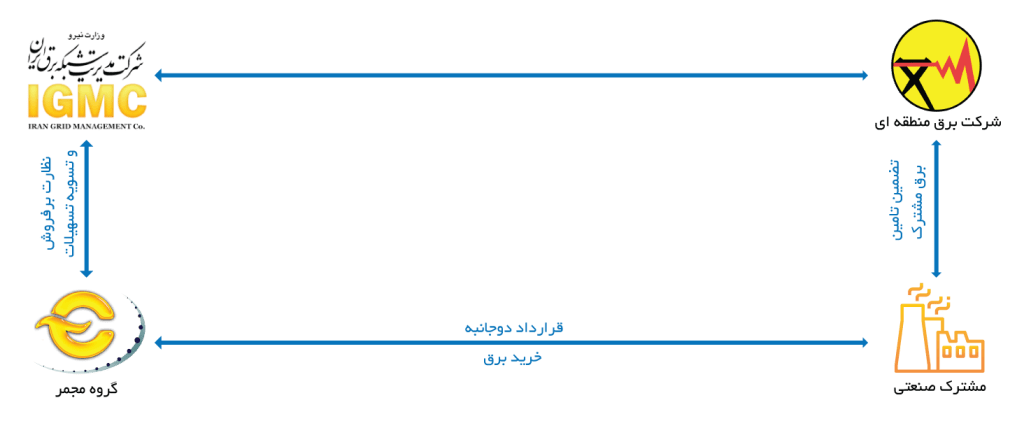
قرارداد دوجانبه

What Is a Bilateral Electricity Contract?

A bilateral electricity contract is an agreement between an electricity supplier (such as a power plant or an electricity retail company) and an industrial or large-scale consumer for the direct procurement of electrical energy.

This type of contract enables large electricity consumers to secure their required energy at mutually agreed prices, with flexible payment terms and greater certainty regarding electricity supply.

Bilateral electricity contracts are registered under the supervision of the Independent System Operator (Iran Grid Management Company) and offer a high degree of flexibility in terms of pricing, payment conditions, and contractual arrangements.

What Is the Role of an Electricity Retail Company?

Electricity retail companies act as specialized intermediaries between electricity producers (power plants) and industrial consumers.

By aggregating the demand of multiple consumers, negotiating with power plants, managing price fluctuation risks, and providing additional services such as energy consumption management consultancy, these companies operate as professional energy suppliers.

For industrial facilities that lack the time or specialized expertise required to monitor the electricity market, working with an electricity retailer can make the procurement process simpler, more cost-effective, and more predictable.

According to Council of Ministers Resolution No. 357/T57467H, dated April 26, 2020:

All industrial consumers with a contracted demand exceeding 150 kW are required to procure their electricity through bilateral contracts or the Energy Exchange.

All industrial consumers with a contracted demand exceeding 150 kW are required to procure their electricity through bilateral contracts or the Energy Exchange.

Under this directive, if a consumer fails to procure electricity through the methods specified in the Electricity Trading Development Guidelines, the facility may be prioritized for load management programs, including power outages.

Furthermore, regional electricity companies and distribution companies are authorized to procure electricity on behalf of such consumers. In these cases, the cost is calculated based on the maximum electricity price in the wholesale market, multiplied by a coefficient of 1.3, and charged to the consumer.

Why Do Industries Need to Purchase Electricity Through Retail Companies?

Factories and energy-intensive industries face several challenges when procuring electricity:

1. Rising Energy Costs

Electricity is one of the major operating expenses for many industries. Even minor changes in electricity tariffs can significantly affect production costs and the final price of products.

2. Risk of Electricity Restrictions and Power Outages

During peak consumption periods, energy-intensive industries are among the sectors most affected by electricity supply restrictions and load management programs.

3. The Need for Financial Planning

Negotiated electricity prices and flexible contractual arrangements can help industrial managers forecast their energy expenses more accurately and manage operational budgets more effectively.

Electricity Procurement Methods for Industrial Consumers

1. Purchasing Electricity Through Bilateral Contracts

Under this method, the consumer enters into an agreement directly with a power plant or an electricity retail company and receives the required electricity under mutually agreed contractual terms.

Key Advantages:

  • The ability to negotiate electricity prices

  • Better control over energy costs

  • More flexible payment terms

  • A simpler electricity procurement process

2. Purchasing Electricity Through the Energy Exchange

Under this method, consumers purchase their required electricity through the trading mechanisms of the Iran Energy Exchange.

Key Features:

  • Electricity prices are determined by market supply and demand.

  • The process requires registration, order placement, and compliance with trading procedures.

  • Prices may fluctuate depending on market conditions.

Bilateral Electricity Contracts vs. Energy Exchange Procurement

One of the main differences between these two procurement methods concerns the timing of electricity purchases and payments.


When purchasing electricity through the Energy Exchange, consumers generally need to purchase their estimated electricity requirements in advance, before the beginning of the consumption period.


If actual consumption differs from the purchased amount, the discrepancy may result in additional financial costs or incomplete settlement of the purchased electricity.


Under a bilateral contract, however, electricity costs can be settled after consumption based on the actual amount of electricity used, subject to the agreed contractual terms.


This means that consumers can benefit from a payment structure aligned with their actual electricity consumption.

Feature

Energy Exchange

Bilateral Contract (MajmarGroup)

Payment Timing

Cash payment before consumption

Credit-based payment after consumption

Procurement Accuracy

Based on estimated consumption; discrepancies may create financial exposure

Settlement based on actual consumption

Administrative Process

Requires trading registration and relevant procedures

Simplified process managed by Majmar Group

Price Fluctuation Risk

Exposed to market price fluctuations

Agreed pricing under the contract

How Can Industries Avoid the 1.3 Electricity Price Penalty?

According to applicable Ministry of Energy regulations, industrial consumers subject to mandatory electricity procurement requirements who fail to secure their electricity through bilateral contracts or the Energy Exchange may face additional electricity procurement costs.


In such cases, the regional electricity company may procure electricity on behalf of the consumer. The applicable cost is then calculated based on the maximum wholesale electricity market price, multiplied by a coefficient of 1.3, representing a 30% additional charge.


The Solution: Securing Electricity Through a Bilateral Contract


One effective way to avoid additional costs associated with delegated electricity procurement is to enter into a compliant bilateral electricity contract.


By choosing this approach:


  1. Your facility can avoid delegated electricity procurement, provided all applicable regulatory requirements are met.


  2. The additional 30% charge associated with the 1.3 pricing coefficient can be avoided.


  3. Your energy costs can be managed through negotiated contractual terms rather than delegated procurement at the applicable wholesale market pricing formula.


Benefits of Working with Majmar Group

With an extensive network of electricity suppliers and partner power plants, Majmar Group provides industrial consumers with competitive electricity procurement solutions and reliable energy supply services.


  • Our key services and advantages include:

  • Electricity procurement from multiple power plants with different pricing options

  • Complete management of bilateral electricity contracts and their registration with Iran Grid Management Company

  • Management of market-related risks and electricity price fluctuations within the agreed contractual framework

  • Specialized consultancy to identify the most suitable electricity procurement model for each consumer

  • Reliable service delivery and support for continuous electricity supply

  • Access to green electricity procurement through the Energy Exchange

  • Reduction or elimination of applicable Article 16 charges on electricity bills through eligible green electricity procurement, in accordance with relevant regulations

Bilateral electricity contracts provide a practical and cost-effective solution for industrial facilities and large electricity consumers seeking better control over energy costs, avoidance of additional procurement charges, and more reliable electricity supply arrangements.

By working with Majmar Group, industrial consumers can benefit from professional electricity procurement services, competitive contractual terms, and expert guidance in navigating Iran's electricity market.

Majmar Group – Today's Innovation, Tomorrow's Light.